
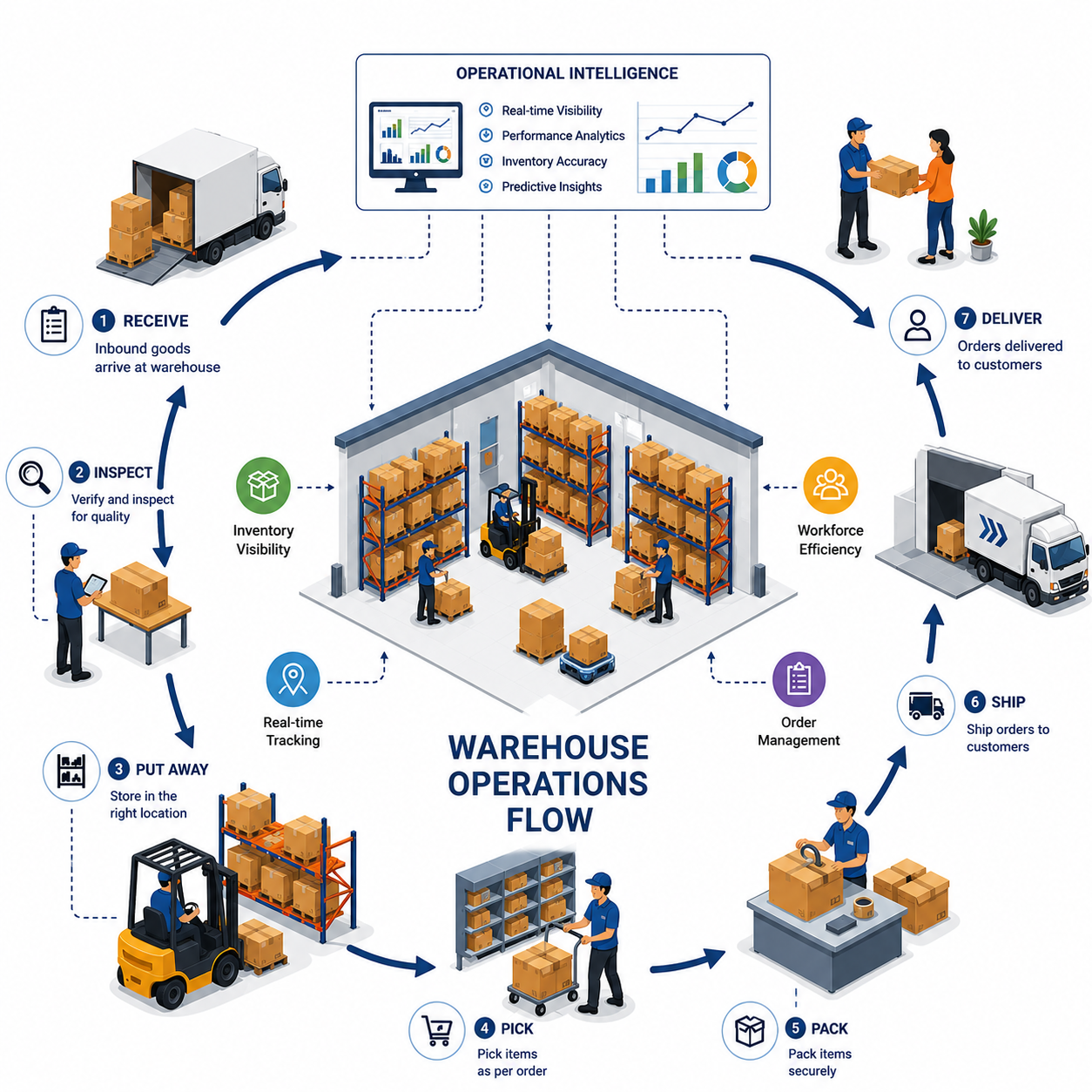
Your warehouse is generating thousands of operational events every hour.
Most WMS platforms tell you what happened.
We help you understand why it happened, what will happen next, and where you can improve productivity before it impacts your business.
PROBLEM
Why do warehouse productivity numbers often tell the wrong story?
Warehouse managers are expected to improve productivity while balancing increasing order volumes, labor shortages, and customer expectations.
Unfortunately, traditional reporting leaves them asking questions like:
- Why did productivity drop yesterday?
- Which warehouse zone is causing delays?
- Are certain products slowing picking?
- Is overtime increasing because of poor planning or changing workloads?
- Which teams are genuinely improving versus handling easier work?
Most Warehouse Management Systems provide operational data, but very little operational insight.
SOLUTION
Warehouse Operational Intelligence
We integrate with your existing systems and continuously analyze warehouse operations to answer questions such as:
- Which warehouse zones are becoming bottlenecks?
- Which picking routes reduce productivity?
- How does workload complexity affect team performance?
- Where are workers spending unnecessary time?
- Which operational issues will impact today's shipping targets?
Rather than replacing your WMS, we extend it with operational intelligence.
WHY US
What Makes Our Approach Different
Most reporting systems measure output.
We measure context.
Instead of comparing two workers by picks per hour, we normalize for factors such as:
- Walking distance
- SKU complexity
- Product size
- Warehouse zone
- Multi-order picking
- Congestion
- Replenishment delays
This enables fair comparisons and more informed operational decisions.
RESULT
Typical Outcomes
Clients typically seek to:
- Improve labor productivity
- Reduce overtime
- Detect bottlenecks earlier
- Improve warehouse throughput
- Better plan staffing
- Make data-driven operational decisions
PROCESS
How We Work
- Understand your warehouse operations.
- Connect to your existing systems.
- Build an operational model from warehouse events.
- Identify bottlenecks and opportunities.
- Deliver actionable recommendations—not just reports.